

Marvin Gas Fireplace Inspection Visits
Marvin stayed a village while everything around it grew, and we like working here for exactly that reason. Chimney Masters looks after gas fireplaces across the area, checking venting, ignition, sensors, gas connections, and seals, and taking the time to talk it through properly afterward.
LEAVE YOUR CHIMNEY TO THE EXPERTS
☑
EXPERIENCE
Serving your community with pride since 2002. Our long-standing track record speaks volumes about our dedication and skill.
☑
HONESTY
Clear, upfront pricing-no surprise charges, even on weekends or holidays. What you see is what you pay.
☑
RESPONSIVENESS
We’re here when you need us most-same-day service and 24/7 emergency availability all year round.
☑
CRAFTSMANSHIP
Full-service chimney care-from inspections to repairs-performed with cutting-edge tools and high standards.
For emergency service call us at : 888-224-6226
What a Marvin NC Gas Fireplace Inspection Involves
Unhurried inspections and a friendly visit for Marvin households.
Marvin Creek runs to about a hundred homes. Firethorne has its golf course, Providence Downs and Broadmoor sit nearby, and nearly everything here rests on half an acre or more under mature oaks. That tree cover is lovely to live with and hard on a vent termination, which is a large part of why we spend so much time outside on a Marvin visit.

Google Reviews from Our Valued Clients
%20(1).png)
Marvin: A Simple Reason to Book Every Autumn
Plenty of Marvin households book at the same point each year, and there is a good reason for it. Oaks drop everything they have through autumn, terminations fill quietly, and a fireplace that worked perfectly in March can struggle by December without anyone doing anything wrong. Booking ahead of that turns a yearly nuisance into a half-hour visit and a cup of coffee.

A Look at the Gas Line
Checking How It Lights

We follow the gas line you can reach, from the shutoff through to the appliance, keeping an eye out for corrosion, loose fittings, and connectors that have been in place longer than they ought to be. If anything needs a repair we will tell you and point you to a licensed gas technician.
We light the fireplace a few times over and watch how it comes up. Hesitation, ports that stay dark, or a flame sitting higher than it should each mean something different, and we would rather work out which than guess at it.

Keeping the Pilot Happy
The Cap and Vent Outside

The pilot needs to hold, not just catch. We look over the assembly, make sure the flame is reaching the sensor the way it should, and run it through a few cycles to check it settles rather than dropping out once the initial light has passed.
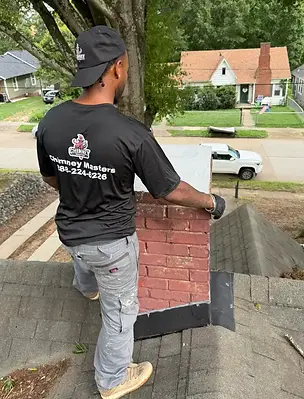
This is where a Marvin visit takes longest. Under mature oaks, terminations gather leaves, acorns and nesting material every single year, so we go outside, look at the cap properly, and check the run for restriction and separated joints.

Testing the Safety Cutoff
Something has to shut the gas off the moment the flame disappears, and on your unit that job belongs to a thermocouple, a thermopile or an electronic sensor. We work out which yours uses and check that it still does it properly. Few other checks matter more.

The Seals Around the Glass
Seals stiffen a little each winter until they stop closing properly against the glass. We work our way around the door checking compression, look over the panel for cracks or a cloudy film, and give you a straight answer on whether it can wait.

Marvin: What an Annual Fireplace Visit Does for Your Household


One Less Thing to Worry About
Most Marvin visits end with everything in order, and that is rather the point. Knowing the fireplace is sound before the cold arrives is worth the half hour it takes to find out.
Keep It Going Longer
A fireplace that gets looked at each year simply lasts longer than one that does not. Small things caught early in Marvin never get the chance to become large ones.
Proper Warmth on Cold Nights
A clear burner and correctly placed logs make a difference you can feel in the room. We report on both, so your Marvin fireplace can be set up to do what you want on the evenings you need it.
Marvin: What Actually Happens When We Come Out

To Start: Everything Cold
The gas line, valve, burner, pilot hardware and firebox all get looked at cold. It is a quiet part of the visit, but seeing it all before anything is lit is what makes the rest of it worth doing.

Then: Outside to the Vent
Next we head outside and give the termination a proper look, then check the vent run back to the appliance. On Marvin's wooded lots this is the stage that warrants the most care, and what turns up is generally straightforward to sort.

To Wrap Up: A Proper Conversation
Once a full cycle is done we talk you through what we found. If everything is fine we will say so plainly, and if something needs doing we will explain why before anything else.
Book an Appointment
Call us to arrange a gas fireplace inspection anywhere in Marvin. We look after homes in Marvin Creek, Firethorne, Broadmoor, Canterfield Creek and Heritage at Marvin, spending proper time on the terminations that wooded lots keep filling. You get a written account and an unhurried conversation about it.
Homeowners Across the Carolinas Trust Chimney Masters
Exclusive Chimney Service Coupons to Keep Your Home in Top Shape!
Frequently asked questions
Does an inspection cover the remote or wall switch?
▼
Where the appliance has them, these controls are generally included, since a fault here presents exactly like an appliance problem even though nothing is wrong with the fireplace itself. Remote systems use a handset and a receiver, both commonly battery powered, and depleted batteries in either are among the more frequent reasons an appliance stops responding. Wall switches and their wiring are also checked where accessible, since a loose connection or a failed switch produces the same symptom as a much more serious fault. Some appliances use a wall-mounted thermostat instead, which introduces its own set of possibilities. Because a control fault and an ignition fault look identical from the homeowner's side, working through the simple possibilities first is a normal part of the process. Mentioning that the appliance stopped responding to its control is useful information when booking.
Why does my gas fireplace flame look too tall?
▼
Flames higher than usual can result from several conditions, and the appearance alone does not identify which. Gas pressure above the appliance specification is one possibility, as is an air shutter adjustment that has been altered or has shifted, restricting the air mixing with the gas. Log or media placement can also change how flames travel, particularly where an item sits close enough to redirect the flame upward rather than allowing it to spread across the burner as intended. On some appliances a taller flame is simply the higher setting of an adjustable control and is entirely normal. What matters more than height alone is whether the flame is producing soot, whether it is touching surfaces it should not, and whether the appearance has changed from what the appliance previously did. A professional evaluation can determine which factor applies.
Can a fireplace built into a wall still be inspected?
▼
Yes, though how much can be reached varies with the installation. Built-in and recessed appliances are extremely common, and the components most relevant to an evaluation are generally accessible through the lower compartment or behind a removable louvre or front panel. This typically provides access to the burner, pilot assembly, control valve, ignition components, and gas connection. Venting is usually assessed at the accessible run and at the termination outside, since the concealed portion between them cannot be viewed directly without opening the structure. Where a section of venting is fully enclosed, the evaluation covers what can be observed and notes what could not be reached rather than implying the whole path was inspected. If a concealed portion is genuinely suspected of having a fault, further investigation may require access that goes beyond a standard visit.
Should both fireplaces be inspected in a two-fireplace home?
▼
Yes, each appliance should be evaluated separately, since they are independent systems and their condition can differ substantially. It applies in Marvin, where larger houses often have a main living area fireplace and a second one in a primary bedroom, sitting room, or outdoor space. The two are commonly used at very different rates, and the one that sees less use is often in worse condition rather than better, since long idle periods allow dust, corrosion, and insect activity to develop. The appliances may also be different models with different ignition systems and venting arrangements, meaning findings on one tell you very little about the other. Arranging both in a single visit is usually straightforward and more practical than scheduling separately.