

Mount Holly Mill Street Vent Services
River Mill Streets
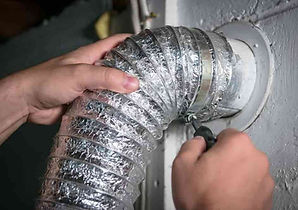
Two things shape what we find in Mount Holly. The first is age, because a good deal of the housing stock came from the mill era and the duct behind the dryer was fitted long after the walls went up. The second is the route, since a duct added after the fact rarely takes the short way to an exterior wall. An older ridged duct gives accumulation more to hold on to, so the run narrows faster than a smooth modern pipe would. Newer properties on the edges of town have longer routes and roof hoods instead, which changes where the buildup sits without changing how much of it there is.

What to Look Out For
A musty smell is a separate signal, and it usually means moisture is standing somewhere in the run rather than moving through it.

Checking Where It Comes Out
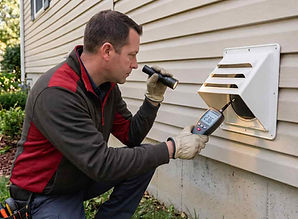
Older Mount Holly homes raise a question before the cleaning one: does the duct reach outside? Start the dryer, walk round the exterior and look for a hood. Finding one, check that the flap is being held open by a firm stream. Finding none is the more important result, because a run that terminates in a crawl space has been feeding warm damp air under a house that is already close to the river. Cleaning does not touch that problem. On newer properties the hood is normally higher up and the same flap test applies.
Mount Holly Service Streets
Everywhere from the mill-era streets outward is looked after in Mount Holly. Given how often older runs need more than clearing, cleaning, inspection and repair are dealt with together rather than across separate visits.

Mill-Era Mount Holly Needs Attention


1. Remove the Fuel
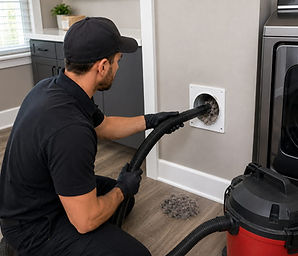
A duct packed with combustible material and unable to release heat is the situation worth avoiding. Taking the lint out addresses the fuel side of it directly, and ridged older ducting typically holds more per foot than smooth pipe.
2. Get Drying Back on Track
Opening the duct returns loads to one cycle and reduces how long the machine spends running hot. In Mount Holly's humid climate, effective exhaust airflow is especially useful for moving warm, moisture-heavy dryer air outdoors.
3. Confirm Where It Discharges
Discharge into a crawl space rather than outdoors is a problem that compounds quietly. Nothing about it is visible indoors, and the inspection is usually what reveals it.
The Mount Holly Process Step by Step

1. Identify and Trace
Locating the discharge point matters more than measuring lint on a mill-era property. Compaction, depth, torn sections, taped joints and the discharge location are all documented while the technician works along the run.

2. Work the Buildup Loose
Older ridged interiors hold material tightly, so each section is repeated until it comes clear.

3. Confirm Discharge Outdoors
To close the visit the dryer is run and discharge read at the termination. On a mill-era home that check confirms two separate things: that airflow improved, and that the duct genuinely finishes outside the building.
Google Reviews from Our Valued Clients
Homeowners Across the Carolinas Trust Chimney Masters
Reduced Rates on Mount Holly Vent Cleaning
Frequently asked questions
What is a sensible schedule here?
▼
A year is the standard answer for most Mount Holly homes. Bring it forward where the duct is original and the run was added to the house rather than designed into it.
Can a duct vent into a crawl space?
▼
It should not, but on older Mount Holly homes we do find it. When the duct was retrofitted years after the house was built, whoever fitted it sometimes stopped at the nearest convenient point rather than carrying the run through an exterior wall. The result is warm humid air discharged under the house continuously, and rerouting is the only real fix.
What makes a blocked duct hazardous?
▼
Two things occurring together: material that burns easily, and heat with no route out. A restricted duct supplies both at once. What matters less than owners assume is how much laundry the house gets through; what matters more is whether the run still moves air at the rate the appliance was designed around.
Which streets fall inside your coverage?
▼
Mount Holly as a whole is covered, taking in the mill-era streets and Catawba Heights. Uncertain about your address? A quick call will settle it.