

Established Matthews Homes, Cleaner Ducts
Established Suburb
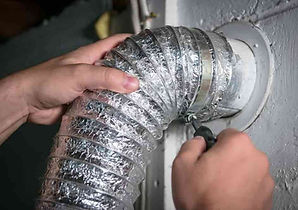
Matthews grew fastest through a stretch when builders had largely settled on a standard: rigid duct, laundry on the ground floor near the garage, a run of moderate length out through a side wall. That is a reasonable arrangement, and it is exactly why the vents here get ignored. There is no obvious failure point, no dramatic roof termination, nothing that draws attention. The duct simply narrows a little each year until a load needs a second cycle and the owner assumes the dryer is getting old. Twenty years of ordinary use puts a substantial amount of lint into even a well-designed run, and each cycle adds warm, moist exhaust air that a narrowing duct moves less efficiently.

How a Matthews Vent Signals
Because the decline is gradual here, it is easy to miss until loads need two runs. Drying time creeps up over years rather than weeks, until a load that used to finish in one cycle needs two as a matter of routine. Alongside it the dryer and the room around it run warmer, because heat that cannot leave through the duct stays where it is. Lint gathering around the door seal rather than in the trap says the run has stopped carrying it out. A burning smell during a cycle is the exception to the gradual pattern and needs dealing with the same day, since it usually means lint has reached the element.

The Check at the Side Wall
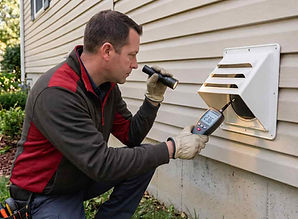
Matthews terminations sit at ground level on a side wall, which makes this the easiest check. Start the dryer and go and stand in front of the hood. Air should push the flap open and hold it there. A flap that stays closed, or opens a fraction and drops, tells you the run is restricted. Look at the hood itself as well: matted lint across the outside, a flap that has stiffened, or a screen somebody fitted years ago and never cleared will all hold air back regardless of how clean the duct behind them is. Ground-level hoods also collect leaves and mulch, which nobody thinks to check.
Matthews and the Surrounding Towns
Both the cleaning and the inspection are done on one visit rather than split across two, with minor repairs completed then where access and materials allow.

Matthews Houses Are Mostly Due


1. Reduce the Risk of Burning
Fire needs fuel and heat in one place, which is exactly what a blocked duct provides. Clearing the buildup lowers that risk, and a twenty-year run generally has more in it than the owner would guess.
2. Recover the Drying Time
Better airflow means loads finish first time rather than second. Across a Matthews year that can mean less energy spent per load, and it removes a great deal of hot running from an appliance fighting a restriction.
3. Sort the Hood at the Same Time
A duct cleaned without the termination being cleared can still read as restricted afterwards. Both get done in the same visit, and the result is confirmed at the flap before we leave.
A Matthews Appointment, Step by Step

1. Assess Run and Hood
Recording length, turns, lint depth and restriction happens before a brush appears. The hood is examined at the same time for matting, a stiffened flap or a screen that should not be there.

2. Clear the Duct and the Hood
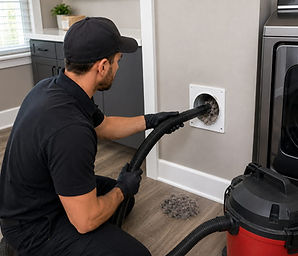
Both the duct and the exterior hood are cleared, since matted lint outside holds air back. Extraction contains what comes loose.

3. Test and Hand Over Findings
Both the duct and the hood are tested with the dryer running before we finish. If the hood has stiffened past the point of working properly, that is explained and written into the report along with everything else found.
Google Reviews from Our Valued Clients
Homeowners Across the Carolinas Trust Chimney Masters
Money Off Matthews Vent Cleaning
Frequently asked questions
When are Matthews vents usually due?
▼
For homes of this age, once a year. Watch the exterior hood as well as the interval, since a flap that has stiffened over the years will restrict a perfectly clean run.
Can the outside hood cause the problem?
▼
Frequently, in homes of this age. Ground-level hoods gather matted lint, leaves and mulch on the outside, and a flap that has been opening and closing for twenty years often stiffens to the point where it no longer lifts fully. When that happens the duct behind it can be perfectly clean and airflow will still be poor. We clear and check the hood on every visit.
Does a restricted vent risk a fire?
▼
Yes, and it does not always begin inside the duct. A hood whose flap has stiffened stops lint leaving even when the run behind it is clean, so heat backs up with nowhere to go and combustible material accumulates behind the obstruction.
What areas around Matthews are covered?
▼
Service reaches all of Matthews, including Sardis, Brightmoor and Crestdale, and homes around the Providence Road corridor. If your address sits near the edge of that, call us and we will confirm coverage before you book.