

Serving Homes Around Lake Norman
Birkdale and Skybrook
Most of Huntersville went up during a concentrated stretch of building, which means the homes here have a lot in common with each other. The laundry usually sits on the second floor, the duct behind it climbs through the wall, and the termination lands on the roof or high on a gable. That layout is tidy from the inside and demanding on the ductwork, because every bend on the way up is a place lint slows and settles. The wooded lots around Birkdale and Skybrook add a second factor: a roof hood surrounded by tree cover is an inviting spot for birds, and a nest at the termination stops airflow far more abruptly than lint ever does. We clear the full run and check what is happening at the top of it.

What a Restricted Huntersville Vent Shows
Drying time is the first thing anyone notices, and it slips gradually rather than suddenly. A load that once finished in a single cycle starts needing a second, and before long that second cycle is not quite enough either. That is restricted airflow rather than an aging machine. The room around the dryer usually runs warmer than it used to, because heat with no route out of the duct stays where it is. Lint escaping around the door seal, rather than collecting only in the trap, points the same way. Treat a burning smell during a cycle as urgent, because it generally means lint has reached the heating element. A musty smell is a different signal entirely and suggests damp is sitting somewhere along the run.

Looking at a Roof Termination
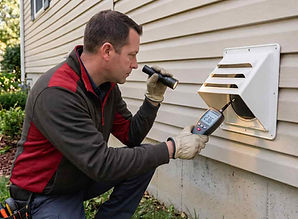
On most Huntersville homes the vent hood is on the roof, which makes the usual check harder but not impossible. Start the dryer, step back far enough to see the hood, and look for the flap moving. If you cannot get a clear view safely, the indoor signals do the same job: lint around the door seal, a laundry room that runs hot, and drying times that keep stretching. Roof terminations are also where nesting shows up. A bird nest built into the hood blocks airflow completely rather than gradually, so if drying performance dropped suddenly rather than over months, that is worth mentioning when you book so the technician arrives prepared for it.
Where We Work Around Huntersville
Cleaning and inspection are completed on the same visit, and minor repairs can usually be handled at the same appointment when access and materials allow, which matters here because a roof termination is not somewhere anyone wants to make a second trip for.

Why Huntersville Homes Need This Done


1. Bring the Fire Risk Down
Combustible material and heat with no way out are what make a blocked duct worth taking seriously. Removing the buildup and restoring airflow lowers that risk, and the change is measurable at the termination straight afterwards.
2. Stop Running Two Cycles
Clearing the run puts the dryer back to finishing a load first time. Over a Huntersville year that means less energy spent on drying, and it takes hours of unnecessary running time off a machine fighting a restriction it cannot beat.
3. Find Nesting Before It Blocks
Wooded lots and roof hoods are a combination birds take advantage of every spring. Nesting material at the termination cuts airflow abruptly, and it is often what turns a gradual decline into a dryer that stops working properly overnight. The cleaning visit is often when the nesting material is first identified and assessed.
Inside a Huntersville Appointment

1. Trace the Run First
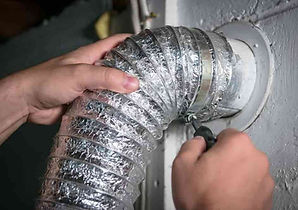
Work opens at the dryer connection and follows the duct upward to the termination point. Lint depth, restriction, damaged sections and any incorrect materials are all noted before cleaning gets under way.

2. Work the Run Loose
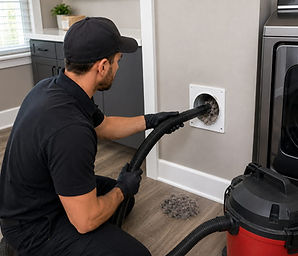
Brushes and extraction travel the full vertical run, with the bends given repeated passes. The roof hood is checked and cleared at the same time, with any nesting material assessed before it is disturbed.

3. Check Discharge and Write It Up
Once the run is open the dryer is started and discharge checked at the roof hood. Anything that needs repair is explained plainly and recorded in the report you keep afterwards.
Google Reviews from Our Valued Clients
Homeowners Across the Carolinas Trust Chimney Masters
Huntersville Vent Deals, Check Before You Book
Frequently asked questions
What interval suits a Huntersville home?
▼
Annually works for most homes here. Family size and laundry volume shift it, and so does a long run to a roof termination. If drying times have grown since the last visit, that is a better guide than the calendar.
Do you clear bird nests from roof vents?
▼
Yes, and it comes up regularly on the wooded lots around Birkdale and Skybrook. A nest built into a roof hood blocks airflow completely rather than gradually, which is why the drop in performance tends to feel sudden. Our technicians inspect the exterior termination for nesting material. Empty or legally removable material can be cleared and the duct behind it checked, while an active nest may mean postponing that part of the work or handling it in line with applicable wildlife regulations. We can also fit a proper vent hood that discourages nesting without restricting flow.
Is a blocked dryer vent actually dangerous?
▼
Yes, and the way it develops is worth understanding. As the run narrows the dryer cycles its heating element more often to finish the same load, so more heat enters a duct that is less able to shed it. Combustible material and rising heat in one enclosed space is the situation to avoid.
Which Huntersville neighborhoods do you cover?
▼
Our coverage takes in Huntersville as a whole, including Birkdale, Skybrook, Wynfield and Vermillion. If your address sits somewhere on the boundary, call us and we will confirm whether it falls inside the service area before you book.