

Recent Build Vent Cleaning, Harrisburg
Newer Construction
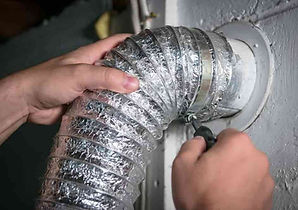
Harrisburg contains some of the newest housing in the area, and that changes what goes wrong. In an older property the duct has degraded over decades; in a recent build it either works as designed or it was installed incorrectly on day one and has been slightly wrong ever since. We find both here. Runs installed a foot longer than the specification allows, a bend added late to route around something, flexible material used on a section that should have been rigid, a hood fitted with a screen that was never meant to be there. None of it shows on a handover inspection, and all of it restricts airflow from the first load onwards.

How a Newer Run Fails
Owners of recent builds usually blame the appliance, because the house seems too new to blame. Drying time is still the signal though: a load needing two cycles means airflow is down. Warmth around the machine says heat is not leaving. Lint at the door seal instead of the trap says the run is not carrying it out. What differs in Harrisburg is that this can appear within a couple of years rather than a couple of decades, and when it does, a build defect is usually the reason.

Checking a Recent Installation
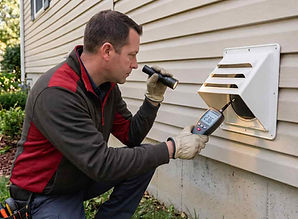
Find the hood, which on Harrisburg builds is generally on the roof or high on a gable. Watch for a flap held open by a steady stream. Beyond that, one thing worth knowing about newer homes: if drying has been mediocre since you moved in rather than getting worse over time, the problem is unlikely to be lint. That pattern points at the installation itself, and cleaning it will not change much. A run that was always too long, or always had one bend more than it should, needs correcting rather than clearing.
Harrisburg and Cabarrus County
Harrisburg and the neighboring Cabarrus County developments sit inside the service area. Cleaning, inspection and repair are handled together, which matters when the finding turns out to be an installation fault rather than accumulated lint.

New Harrisburg Builds Still Need It


1. Keep the Heat Route Open
The hazard is combustible material and trapped heat occupying the same duct. Age has nothing to do with it, and a two-year-old run with an installation fault can hold airflow back as effectively as a twenty-year-old one full of lint.
2. Get the Performance You Paid For
A dryer in a new house should finish a load first time. Where it does not, either the run has filled or it was never right, and both are worth fixing rather than accepting as how the appliance behaves.
3. Identify Build Defects Early
Over-long runs, surplus bends and flexible material restrict every load for the life of the house. Nobody checks these at handover, and they are far cheaper to correct early than to live with.
How the Harrisburg Visit Proceeds

1. Assess the Original Work
Measuring the run and counting the bends comes first on recent construction. Lint depth is recorded alongside, since both matter here.

2. Clear What Has Collected
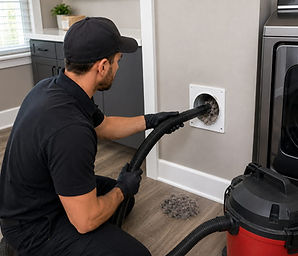
Even a short service life leaves material behind, so the whole route still gets worked. New ducting brushes clean more readily than old, which makes the underlying installation easier to judge.

3. Separate Lint From Design
Comparing measured flow against what a clean run should deliver is the final check. If airflow is still below what it should be with a clean duct, the limitation is the installation rather than the lint, and the report says so explicitly.
Google Reviews from Our Valued Clients
Trusted by Harrisburg New Build Owners
Introductory Harrisburg Vent Cleaning Rates
Frequently asked questions
Does a new house really need this?
▼
Yes, on the same yearly cycle as anywhere else. Two or three years of laundry puts a genuine amount into a duct, and a new house is also where installation faults surface, since nothing else can explain poor performance that early.
Can a duct be wrong from the start?
▼
It happens more than owners expect. A run installed longer than the manufacturer allows, an extra bend added to route around structure, flexible material used where rigid was specified, or a hood with a screen fitted to it will all restrict airflow from the very first load. None of it appears on a handover inspection and all of it is correctable.
Is the fire risk lower in a new home?
▼
Not meaningfully lower in a new house, since it depends on use rather than age. What matters is whether combustible material is accumulating in a duct that cannot release heat, and that depends on use and installation rather than the age of the building. A new run that was fitted badly can restrict airflow immediately.
How far does Harrisburg coverage extend?
▼
Harrisburg and the neighboring Cabarrus County developments, including Rocky River. Give us a call with the address if you want coverage confirmed before booking.